
Meditation
Updated: Mar 13
On a experiential journey into the depths of my heart
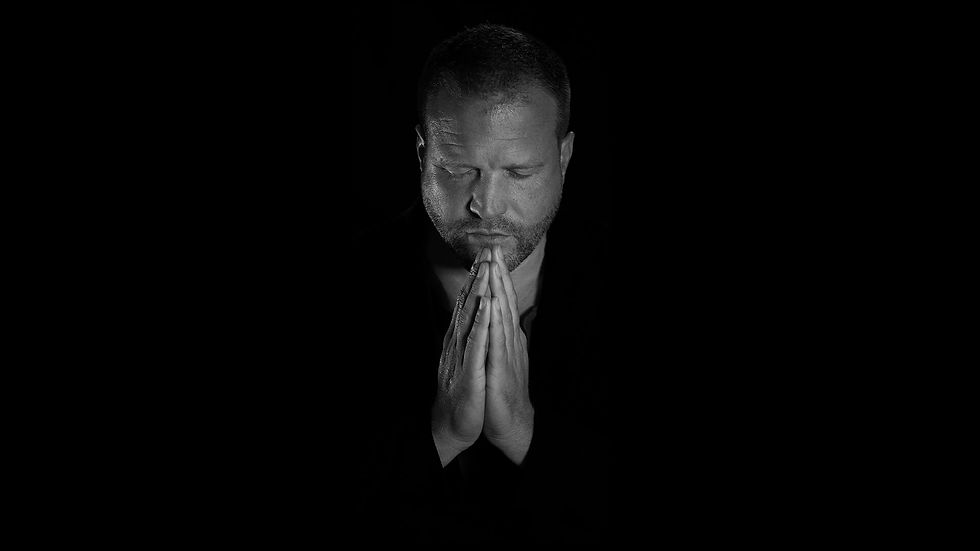
What is meditation? Does meditation mean sitting upright cross-legged, closing your eyes, and being completely still? Or what exactly happens there?
These questions had been on my mind for quite some time.
„What happens when your mind no longer dictates
how life should be?“
(Daniel Hertlein)
First encounter
Several years before I met Daniel, meditation had already become an increasingly important focus for me. I was fascinated by Buddha statues, which seemed to simply sit there radiating such calm and quiet contentment, a kind of peaceful majesty, without appearing cold — completely absorbed in themselves and yet open and connected.
I attended various seminars, practiced according to instructions from books and CDs, or simply in whatever way felt right for me.
My first experiences were intense and sometimes frightening. I immersed myself in realms of perception that took away my usual control or were so unfamiliar that I sometimes felt truly afraid. Nevertheless, my fascination with meditation never left me.
Over time, I also read more and more books by spiritual masters, all of whom emphasized meditation as a central point of their teachings and as a crucial path to self-realization.
„Wisdom teachings that are not confirmed and lived by your own heart are worthless. You carry the most important things within you.
The teachings live through you.“
(Daniel Hertlein)


I first came into contact with Daniel indirectly through a CD cover on which he was sitting with his eyes closed in the lotus position. Just looking at this image evoked a deep sense of familiarity, calm, and peace within me — and it stayed with me.
A few weeks later, someone gave me Daniel’s first published meditation recording, “HIER UND JETZT IST GENUG” (HERE AND NOW IS ENOUGH), and shortly afterwards I found myself in one of his yoga classes - which took place very close to where I lived.
After a few hours, Daniel personally showed me the sitting posture for meditation: legs crossed, pelvis tilted slightly forward, spine upright, sternum slightly raised, shoulders relaxed, crown of the head facing upward, and chin gently aligned with the spine. The left hand rested in the right, the thumbs touched lightly, the eyes were either closed or half-open, and the gaze was directed slightly downward — but wide and open.
In this stable posture, the body was able to relax, the spine held it from within, and attention followed the breath. The exercise was simple: stay with the breath. The mind became calm and clear. This moment had an absolute wow effect on me: lightness and stability at the same time — almost floating and yet deeply grounded.
With increasing practice, this posture became more familiar. The body remembers and assumes it almost automatically – the mind makes room, aliveness becomes palpable. An essential point in Daniel's practice, which he emphasizes again and again, is precisely this kind of aliveness: turning from thinking to feeling, immediate inner experience and being as present as possible – connected to the life that is happening right now.
(Audio in German language - please find translation into English in the download file below)

Pure Presence
„If you see a teacher as an ordinary person, you will receive the blessing of an ordinary person — if you see him as a Buddha, a Buddha will bless you.“
(Daniel Hertlein)
Some time later, I had a brief one-on-one conversation with Daniel, which he offered to every participant at a retreat. I would like to share my experience from that time here:
There sits Buddha in front of me
During a retreat, when I opened the door to our practice room, I saw Daniel already sitting quietly and upright in meditation.
I hardly dared to enter. Every step I took toward him felt enormously difficult, as if I were in a magnetic field - a strong feeling of awe seized my body, accompanied by “I'm glad I'm allowed to be here.”
The whole room was so filled with a highly present atmosphere, as if this vibration were speaking to my thoughts: “Guys, if you show up now, I can't promise you'll get out of here alive.” (laughter)
My head didn't dare to question, analyze, or somehow logically explain what was going on here. The activity of my inner thoughts was already too scared to even surface. It knew that this fiery, alert presence would simply blow it away - that it had no place here.
When I finally stood in front of Daniel, it was crystal clear: “This is no ordinary person sitting in front of me — this is a Buddha.” There was no question about it. And I felt a strong urge to bow. I couldn't speak, I just had to bow.
Daniel opened his eyes, invited me to take a seat, and asked, “Would you like to say something?” I was so filled with gratitude to be there that I didn't want to speak... I just wanted to sit there. That was all I needed.
As we sat facing each other in silence, every fiber of my being realized that I was experiencing pure presence. This was no longer a dream. It was pure, immediately experienced reality — here and now. Outwardly unspectacular, natural, and yet deeply pervasive.
Immersing deeper

This experience of presence, which was so profound for me and carried by deep silence, stayed with me for a long time. I asked myself how I could make it a more permanent experience. And I realized what was still standing in the way: how much certain habits and perspectives, passions, emotions, hopes, worries, and fears had a hold on me and determined my actions or inactions. I became aware of how challenging it is to remain awake and in the immediate experience in everyday life, because the mind so quickly clings to all kinds of things.
Either I reacted automatically or I suppressed what arose within me. I avoided situations and people that could trigger anger, sadness, pain, or insecurity in me - and always found enough justifications for doing so. My mind projected the causes outward. It seemed to know exactly what others needed to change - while I myself struggled to truly allow my own feelings, let alone name or express them.
I preferred to compensate for inner turmoil and physical tension with food, drink, lots of exercise, and other distractions, rather than facing my inner challenges.
In silent meditation, however, I could no longer avoid all of this and realized how thoughts, emotions, and feelings arose within me without me having to react to them immediately or suppress them. The distance between impulse and action grew, and with it a new freedom in my everyday life—especially in my contact with other people.
Now I could choose what I was relating to and get involved. I learned to face my feelings instead of avoiding them, to deal with many situations in a more playful way, to discover life, and to explore the vitality within me.
Inner dynamics
Intense meditations followed – they became dynamic, lively, moving. Blockages became more noticeable, stuck areas in the body were touched, loosened, and shaken up. Many things that had previously lain dormant and unnoticed were set in motion.
The more that came up, was felt through, and could be released, the more frequent were the phases of lightness and freedom in which life simply happened. No mind interfering, wanting something not to be or to be different.
The body reacted, releasing tension, and tears of relief often flowed. Energy was freed. Feelings were able to unfold, were allowed to be there, to flow - they finally found expression. New strength and joie de vivre were awakened.


This new, rather fiery style did not fit into my usual image of meditation. It was direct, lively, intense. The more lively it became, the calmer the activities of the mind became. At times, it even disappeared completely. Afterwards, I felt as if I had been flushed out and cleansed. It was like a deep cleanse, allowing me to go further and deeper.
„Life challenges us to feel things. Everything I don't want to feel creates a blockage and ultimately makes me unhappy — because it separates me
from becoming one with life.“
(Daniel Hertlein)
Being free
Gradually, I became aware of how much my attitude in everyday life influences my meditation - and how my meditation, in turn, shapes my experience of everyday life.
In a satsang, Daniel spoke about change through pure seeing and the art of non-attachment:
"In our practice, you detach yourself from attachments and realize that seeing itself changes things. You see your interest in something. And through your seeing, you lose interest.
For example, if you want a cake, then buy a cake.
But you can also let the cake disappear in your mind and simply walk past this wonderful bakery. If you succeed in doing so, then you know: “Cake is okay, but no cake is okay, too.”
However, if the impulse “Ooh, I want a cake.” immediately urges you to act when you see the bakery... and you walk out of the bakery shortly afterwards with a delicious piece of cake, then we cannot speak of non-attachment.
This means that pure seeing takes away the power of the thought “I want a piece of cake.”
The thought simply arises, is allowed to be there, and then disappears again. You don't have to relate to it and thereby charge it with energy – and the impulse to act either doesn't arise or is so weak that it no longer compels you to act in the usual way.
This change through pure seeing has nothing to do with discipline, but with alertness... with presence.
This allows you to participate in life playfully, but also to let go of everything at any time. You can buy a cake or not.
That is your freedom."


Healing guidance
I repeatedly reached my limits in my efforts to continue practicing diligently and solve everything on my own. Until I finally gave up and reached out inwardly - and asked for help and support.
„The subtle permeates the gross and dissolves it..“
(Daniel Hertlein)
During his lessons, Daniel often responded to my silent cries, standing close to me shortly afterwards, touching me or speaking softly, which gave me a sense of security and moved me deeply. Sometimes he stood still with his eyes closed, his hands slightly open upward, asking the spiritual world for luminous support.
Shortly thereafter, the vibration in the room changed and feelings began to flow within me. Gentle, permeating energies loosened stuck structures within me. Carried by a deep sense of peace, everything appeared luminous and delicate.
My heart opened naturally. Relief and love spread through me. My mind was quiet - simply not there. What arose and unfolded within me was heavenly familiar.
These experiences are gifts of grace for me.
(Audio in German language - please find translation into English in the download file below)
From then on, the meditations took on a new character: years followed in which healing work was at the forefront. The more I was able to heal, liberate, and redeem myself, the more fulfilling and luminous my meditations became. I also managed to meditate longer and deeper, to be present more easily... and to remain so.


„We are timeless souls who inhabit a body for a short time in order to participate in an ascension process here on Earth.“
(Daniel Hertlein)

A gift
Today, I see meditation as a great gift. For me, it is above all an inner attitude - a way of being in life.
It helps me to face life's challenges with equanimity — knowing that nothing is permanent. It supports me in opening my heart more and more and participating in life in a more playful, joyful, and conscious way.
It allows me to experience my soul as it rises within me, unfolds, and embraces all life with respect and compassion.
It is a wonderful invitation to be receptive to immediate experience — clear and present in the here and now.
(Audio in German language - please find translation into English in the download file below)

„The mind only becomes completely still when it rests in divine love.
And that is the deepest meditation.“
(Daniel Hertlein)


